TEXT YOUNES EL OUAFIQ
Ardna, an Arabic word meaning “our land,” is an installation by Moroccan artist Mohammed El Hajoui that speaks of belonging, loss, and resilience through material, gesture, and collective memory.
At the center of the work stands an olive tree, surrounded by a carpet of ash carefully arranged on the ground. The ash wraps and protects the plant, acting as a natural fertilizer for its roots, while simultaneously forming geometric patterns inspired by the keffiyeh — a symbol of Palestinian resistance and steadfastness. In Ardna, the land is not only represented; it is actively nourished.
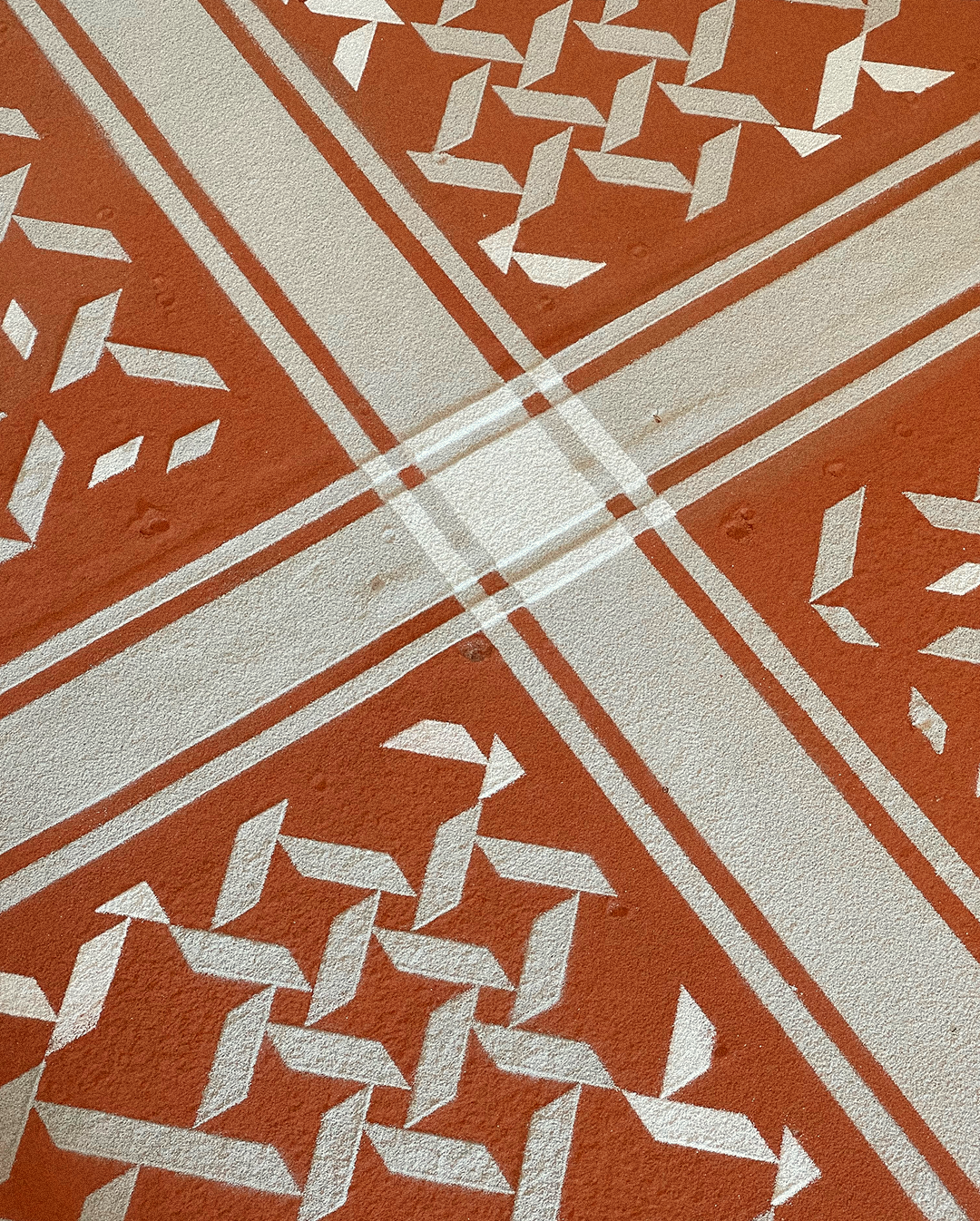
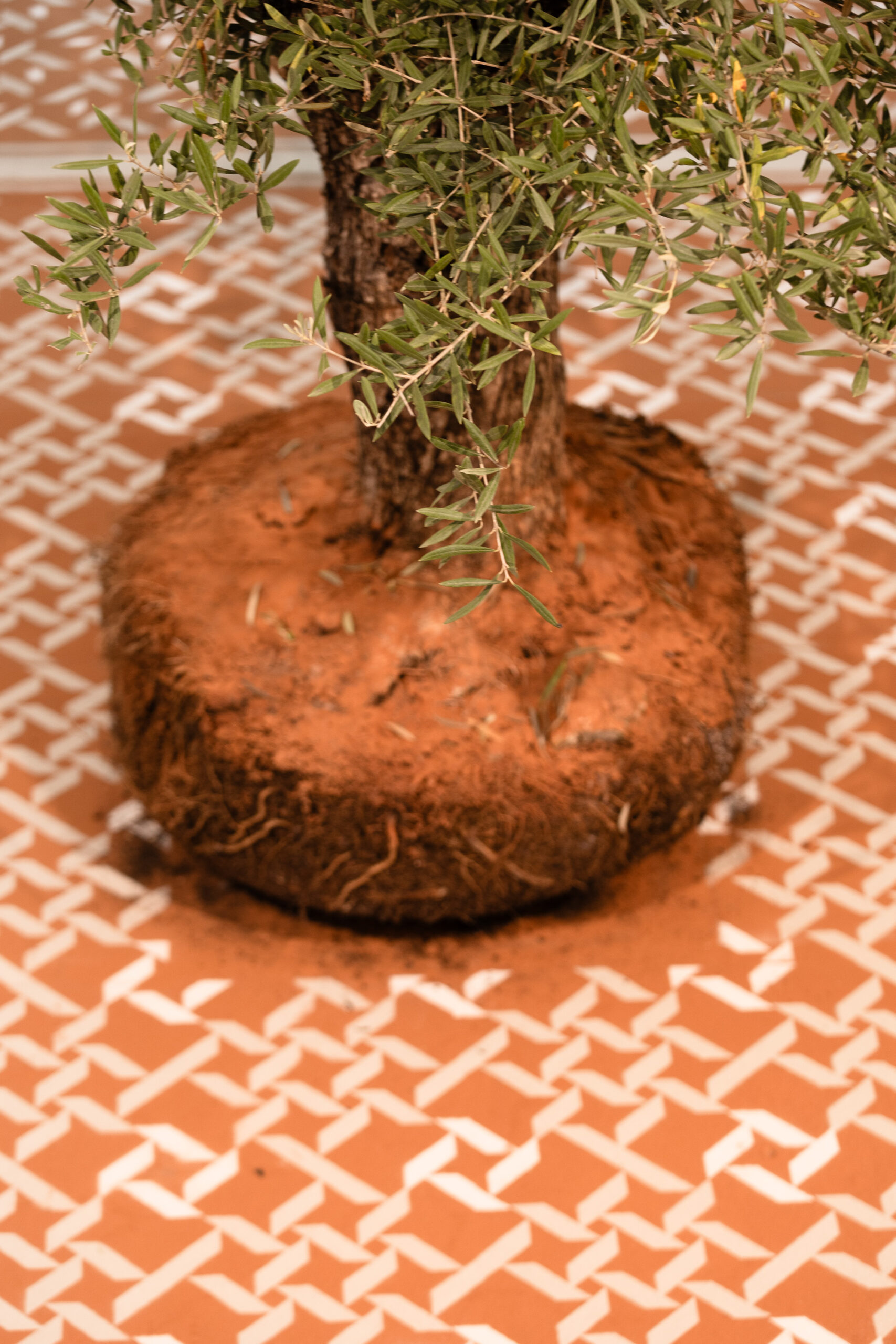
The installation is built around a powerful duality: destruction and hope. The ash, a residue of burning and erasure, becomes a medium of care and regeneration. What remains after loss is transformed into sustenance, reinforcing the olive tree’s bond to the soil it inhabits. In this way, Ardna becomes both a memorial and a gesture of continuity.
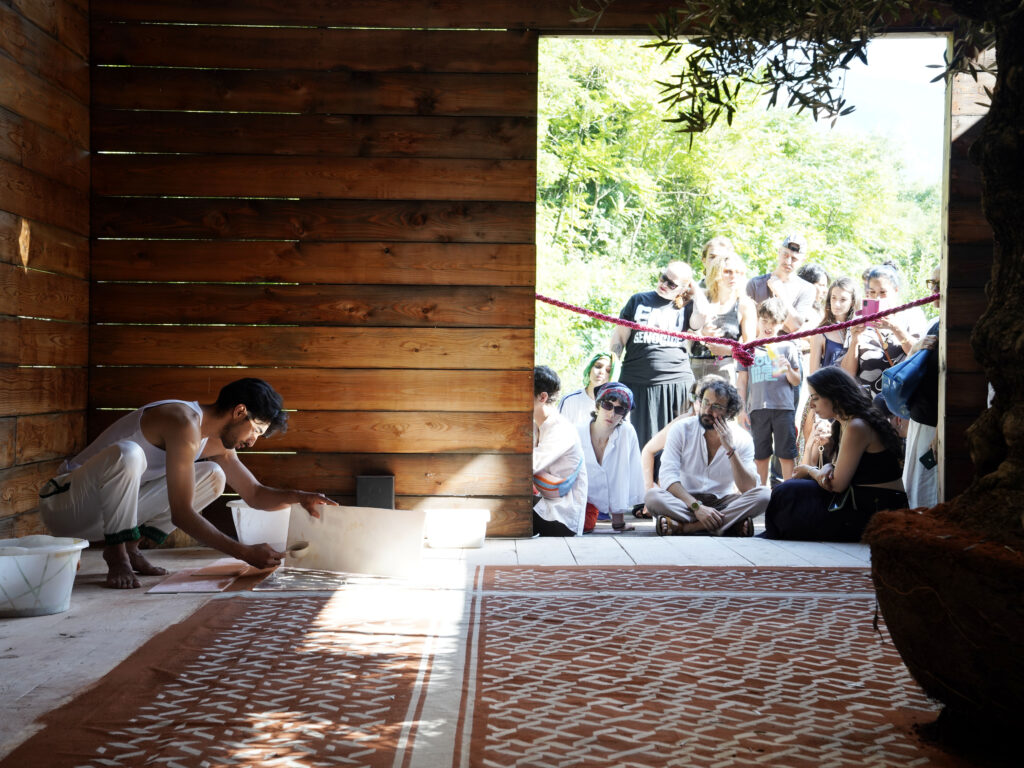
Process is central to the work. The act of composing the keffiyeh pattern is slow and deliberate. El Hajoui sifts the ash through his hands in precise, repeated movements, entering a state of meditation that borders on ritual. The making of the work becomes an act of devotion — a physical and spiritual engagement with the land and its history.
The olive tree itself carries a deep symbolic weight. In Palestinian culture, it represents endurance, identity, and rootedness, with cultivation dating back nearly six thousand years. Over decades of occupation, millions of trees — many of them ancient olive trees — have been uprooted or burned, an act that extends beyond environmental damage to become a direct assault on memory, livelihood, and presence. In Ardna, the olive tree stands as a witness and a survivor.
A collective dimension further strengthens the installation. During its presentation, more than thirty people — artists, audience members, and the hosting institution’s team — participated in a symbolic gesture. Together, they gathered the ash and soil around the base of the tree, lifting and enclosing it as if forming a placenta, reinforcing the idea of shared responsibility and care. The work thus moves beyond the individual artist, becoming a communal act.
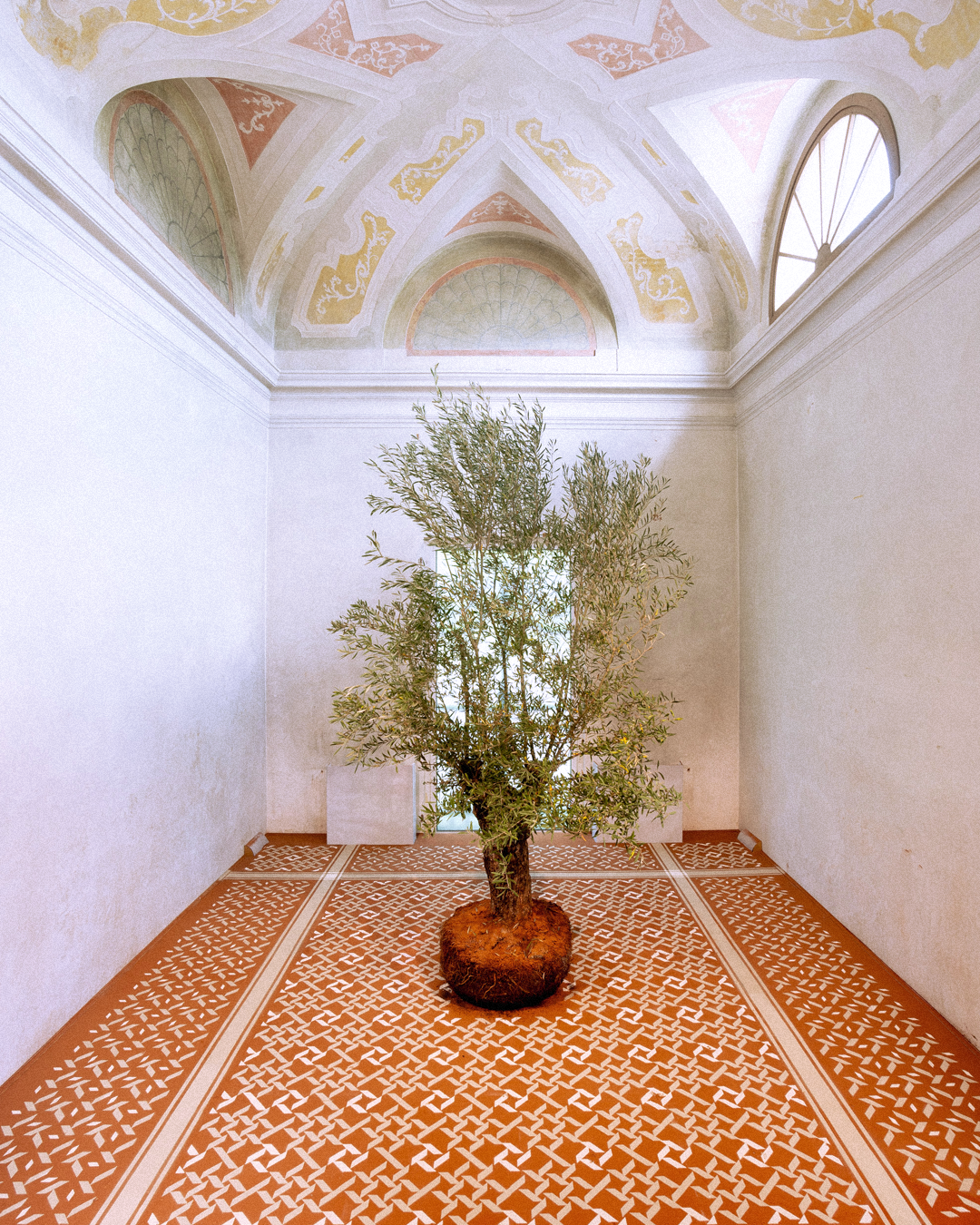
Each olive tree used in Ardna is later replanted. The ash and soil that formed the installation are buried beneath its roots, allowing the artwork to live on as nourishment for the tree itself. The project’s name remains with the plant, binding art, land, and life into a single, enduring gesture.
Inspired in part by a line from poet Mahmoud Darwish — “If the olive trees knew the hands that planted them, their oil would become tears” — Ardna is a quiet yet forceful meditation on land as memory, on care as resistance, and on art as a living, ethical act.
YS: Can you tell us about your childhood and how your cultural background shaped your path as an artist?
MH: I was born in 1995 in Morocco, not far from Marrakech, in a small city called Kelaa Des Sragha. When I was very young, my family moved to Italy. Growing up between two cultures deeply marked me. For a long time, I didn’t consciously integrate my Moroccan background into my work. It was only during university that I began to understand how powerful my cultural heritage could be—not as something nostalgic, but as a language to express who I am.
YS: How do you define Moroccan culture, and how does it influence your work today?
MH: Moroccan culture is incredibly rich—from craftsmanship and architecture to hospitality and spirituality. What stands out the most to me is the generosity of people and the survival of ancestral practices. Many communities still work by hand, preserving techniques passed down through generations. This authenticity is something I feel responsible for carrying forward through my art.
YS: RADICI is a deeply symbolic installation. Can you tell us more about it?
MH: Radici was my first immersive installation, created during my residency at Fabrica in 2022. It is composed of two central elements: a carpet and a door.
The carpet represents hospitality and ritual—a place where people gather to share food, daily life, and religious moments. It was made entirely by hand using flour, referencing ancient domestic practices.
The door functions as a symbol of welcome and passage, echoing the mihrab in mosques, oriented toward Mecca. Together, these elements speak about roots, memory, and belonging.
YS: What role does art play in preserving culture in a globalized world?
MH: Art is a carrier of history. It can preserve culture while also making it accessible to others in an authentic way. Through art, culture doesn’t remain frozen—it travels, evolves, and reaches people who may not otherwise encounter it. My work aims to create spaces for reflection, where viewers can experience a sense of calm and connection while engaging with my cultural origins.
YS: Which symbols return most often in your practice?
MH: The door is a recurring symbol in my work. In Arab culture, the door represents welcome, transition, and openness. It is the first thing a guest encounters—a threshold between worlds. Migration, movement, and the search for belonging are all contained within this symbol.
Artist Mohamed El Hajoui